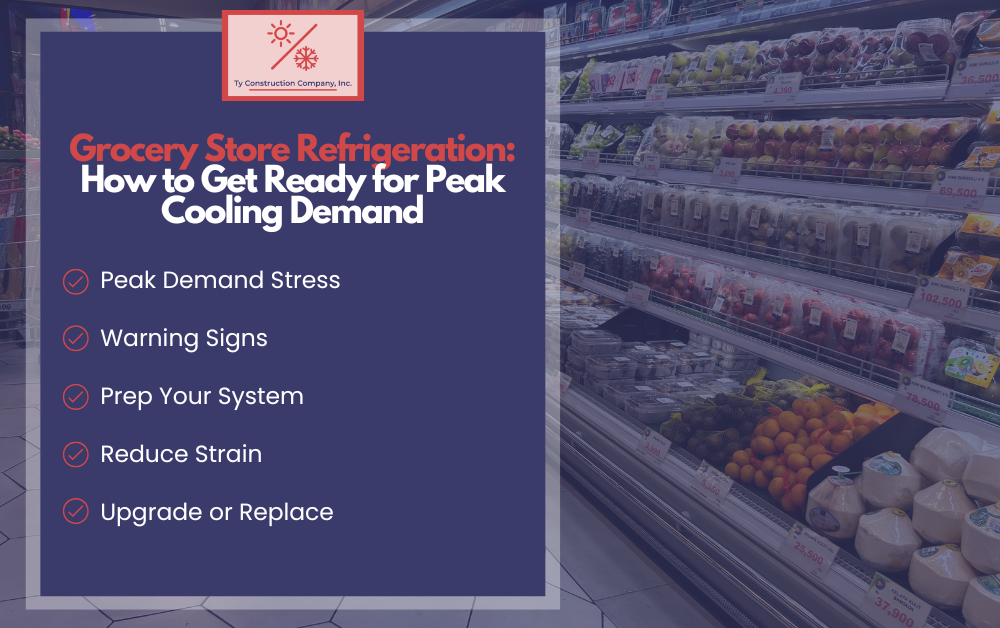
As temperatures rise and customer traffic increases, grocery store refrigeration systems are pushed to their limits. Warmer weather means longer run times, more frequent door openings, and higher overall demand, all of which can put added strain on your equipment. Without proper preparation, this increased workload can lead to inconsistent cooling, higher energy costs, and even unexpected breakdowns.
For grocery stores, reliable refrigeration isn’t optional. It directly impacts food safety, product quality, and day-to-day operations. Taking the time to prepare your refrigeration systems before peak demand hits can help you avoid costly disruptions and keep everything running smoothly throughout the busiest months of the year.
Why Peak Cooling Demand Puts Stress on Grocery Store Refrigeration
Peak cooling demand places a significant strain on grocery store refrigeration systems, especially as temperatures rise and customer traffic increases. Warmer ambient air makes it harder for equipment to maintain consistent internal temperatures, forcing systems to run longer and work harder throughout the day.
At the same time, increased foot traffic leads to more frequent door openings on cases and walk-in units. Every time a door is opened, warm air enters and the system must compensate, adding to the overall workload. This constant cycling can reduce efficiency and increase wear on key components.
Longer run times and heavier system loads also mean higher energy consumption and a greater risk of performance issues. Without proper preparation, even well-functioning refrigeration systems can struggle to keep up, leading to temperature fluctuations, product risk, and potential downtime during the busiest time of year.
Signs Your Grocery Store Refrigeration System Isn’t Ready
Before peak demand hits, your grocery store refrigeration system will often show warning signs if it’s not prepared to handle the increased load. Catching these issues early can help you avoid costly breakdowns and product loss during the busiest time of year.
Common signs to watch for include:
- Inconsistent temperatures across cases or walk-in units
- Frost buildup or excessive condensation
- Unusual noises coming from compressors or fans
- Longer cooling cycles or systems running constantly
- Rising energy bills without a clear explanation
These issues often point to underlying problems like poor airflow, worn components, or an overworked system. If you notice any of these warning signs, your system may not be ready to handle peak cooling demand without maintenance or adjustments.
How to Prepare Your Grocery Store Refrigeration for Summer
Getting your grocery store refrigeration system ready before peak demand hits starts with proactive maintenance and a few key adjustments. Taking these steps early can help prevent breakdowns, improve efficiency, and keep your store running smoothly during the busiest months.
Start with a thorough inspection and preventative maintenance service. This should include cleaning condenser coils, checking refrigerant levels, inspecting door seals, and ensuring all components are functioning properly. Even small issues, if left unaddressed, can turn into major problems under increased load.
You should also verify that thermostats are calibrated correctly and that temperatures are consistent across all units. Proper airflow is critical, so make sure vents are clear and avoid overloading cases, which can restrict circulation and force the system to work harder.
Finally, test any backup systems or monitoring tools you have in place. Being able to quickly detect and respond to temperature changes can make a big difference in preventing product loss and minimizing downtime during peak cooling demand.
Best Practices to Reduce Strain During Peak Demand
Even with proper preparation, daily habits play a big role in how well your grocery store refrigeration performs during peak cooling demand. Small operational changes can reduce strain on your systems and improve overall efficiency.
Here are a few best practices to implement:
- Limit unnecessary door openings on cases and walk-ins
- Train staff to close doors quickly and securely
- Organize inventory to allow proper airflow between products
- Avoid overstocking refrigeration units
- Regularly monitor and log temperatures throughout the day
These simple adjustments help your refrigeration system maintain stable temperatures without overworking. Over time, they can reduce energy usage, extend equipment lifespan, and lower the risk of unexpected failures during the busiest time of year.
When It’s Time to Upgrade or Replace Equipment
In some cases, preparation and maintenance are not enough to keep your grocery store refrigeration system performing under peak demand. If your equipment is struggling despite regular service, it may be time to consider an upgrade or full replacement.
Frequent repairs, ongoing performance issues, and inconsistent temperatures are all signs that your system may be nearing the end of its lifespan. Older equipment often cannot keep up with increased demand, especially during warmer months, and may lead to higher energy costs and greater risk of product loss.
Upgrading to newer refrigeration systems can improve efficiency, reliability, and overall performance. Modern equipment is designed to handle higher workloads while using less energy, helping you reduce operating costs and avoid unexpected downtime.
If your current system is holding your operations back, investing in new or refurbished equipment can help ensure your store is fully prepared to handle peak cooling demand.
Stay Ahead of Peak Cooling Demand
Preparing your grocery store refrigeration system for peak cooling demand is essential to keeping your operations running smoothly. From early maintenance to daily best practices, taking a proactive approach can help prevent breakdowns, reduce energy costs, and protect your inventory during the busiest time of year.
If you’re unsure whether your system is ready, TY Construction can help. Their team provides inspections, maintenance, and equipment upgrades to ensure your refrigeration system performs when it matters most. Reach out today to get your systems ready before peak demand hits.