When peak heating or cooling season arrives, commercial HVAC systems have to work harder to keep buildings comfortable, efficient, and safe for daily operations. For businesses, that added demand can quickly expose small problems that may have gone unnoticed during milder months. A worn part, dirty air filter, airflow issue, or aging system component can turn into an unexpected breakdown when the system is needed most.
That is why HVAC preventative maintenance matters before peak season begins. By scheduling service early, business owners and facility managers can reduce the risk of costly repairs, improve system performance, and help maintain a more comfortable environment for employees, customers, and visitors.
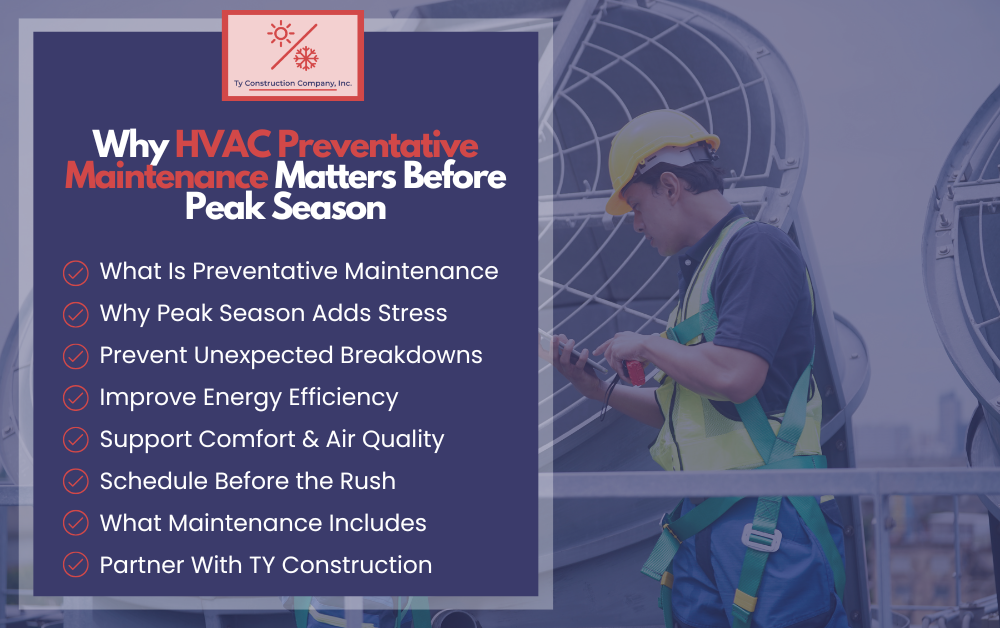
What Is HVAC Preventative Maintenance?
HVAC preventative maintenance is the routine inspection, cleaning, testing, and servicing of a heating and cooling system before a major problem occurs. Instead of waiting for the system to break down during the busiest part of the year, preventative maintenance gives technicians a chance to look for warning signs early and correct smaller issues before they become costly disruptions.
For commercial buildings, this may include checking air filters, belts, motors, coils, electrical connections, thermostats, refrigerant levels, drainage lines, and overall system performance. The goal is to make sure the system is operating safely, efficiently, and consistently before it has to handle the heavy demand of peak heating or cooling season.
Why Peak Season Puts Extra Stress on HVAC Systems
Peak season places more pressure on commercial HVAC systems because the equipment has to run longer and more often to maintain comfortable indoor temperatures. During extremely hot or cold weather, the system may have fewer breaks between cycles, which can increase wear on key components.
Small problems are also more likely to show up when the system is under heavier demand. Restricted airflow, dirty air filters, worn belts, weak motors, refrigerant issues, or thermostat problems may not seem urgent during mild weather. However, once temperatures rise or drop, those issues can make it harder for the system to keep up.
For businesses, that added strain can lead to uneven temperatures, higher energy use, poor comfort, and unexpected breakdowns during the time when the HVAC system is most important.
Preventative Maintenance Helps Reduce Unexpected Breakdowns
One of the biggest reasons to schedule HVAC preventative maintenance before peak season is to lower the risk of sudden system failures. When equipment is inspected before it is under heavy demand, technicians can identify worn parts, loose connections, clogged components, airflow restrictions, or other issues that may lead to a breakdown.
This is especially important for commercial buildings because HVAC problems can affect more than comfort. A failed system can disrupt employees, customers, tenants, products, equipment, and daily operations. For businesses that rely on steady indoor temperatures, even a short period of downtime can create unnecessary stress and expense.
Preventative maintenance gives businesses a better chance to correct problems early instead of reacting to emergencies later. While no service can prevent every possible issue, routine inspections can help reduce avoidable repairs and keep the system more reliable when it matters most.
Maintenance Can Improve Energy Efficiency
A commercial HVAC system that is dirty, clogged, or struggling with worn components often has to work harder to heat or cool the building. When airflow is restricted or parts are not operating properly, the system may run longer than necessary to reach the desired temperature. Over time, that extra strain can lead to higher energy use and increased utility costs.
HVAC preventative maintenance helps keep the system running as efficiently as possible before peak season begins. Tasks like replacing dirty air filters, cleaning coils, checking thermostat settings, testing airflow, and inspecting key components can all support better performance. When the system can move air properly and operate without unnecessary strain, it is better prepared to handle seasonal demand.
For businesses, improved efficiency can make a noticeable difference. A well-maintained HVAC system can help control operating costs while also supporting a more consistent indoor environment for employees, customers, and visitors.
Better HVAC Performance Supports Comfort and Indoor Air Quality
Commercial HVAC systems do more than heat and cool a building. They also help manage airflow, ventilation, humidity, and indoor comfort throughout the space. When the system is not working properly, businesses may notice hot and cold spots, stale air, uneven temperatures, or areas that feel less comfortable for employees and customers.
HVAC preventative maintenance helps keep the system performing more consistently. During a maintenance visit, technicians can check air filters, airflow, coils, and other components that affect how air moves through the building. When these parts are clean and functioning correctly, the system can do a better job of circulating conditioned air and supporting a healthier indoor environment.
This is especially important before peak season, when the HVAC system may be running for longer periods of time. Preparing the system early can help businesses maintain better comfort, improve airflow, and create a more reliable indoor experience during the months when heating or cooling matters most.
Why Businesses Should Schedule Maintenance Before the Rush
Waiting until peak season to schedule HVAC service can make maintenance more difficult and more stressful. Once temperatures become extreme, many businesses begin calling for repairs, inspections, and emergency service at the same time. That can lead to busier schedules and less flexibility for companies that need quick support.
Scheduling HVAC preventative maintenance before the rush gives businesses more time to address concerns before the system is under heavy demand. If a technician finds a worn part, airflow issue, or performance problem, there is usually more time to make repairs without disrupting normal operations.
For commercial facilities, early maintenance can also help with planning. Instead of reacting to a breakdown during business hours, owners and facility managers can prepare ahead of time and feel more confident that their HVAC system is ready for peak season.
What Commercial HVAC Maintenance May Include
Commercial HVAC maintenance can vary depending on the type of system, the age of the equipment, and the needs of the building. In general, a maintenance visit is designed to review the system’s condition, improve performance, and catch potential concerns before peak season begins.
During HVAC preventative maintenance, a technician may:
- Inspect and replace dirty air filters
- Check thermostat settings and operation
- Clean coils and key system components
- Inspect belts, motors, fans, and electrical connections
- Check refrigerant levels
- Test airflow and system performance
- Look for signs of wear, leaks, or drainage issues
- Confirm the system is operating safely and efficiently
These steps help business owners better understand the condition of their HVAC system before it is pushed harder during peak heating or cooling season.
Partner With TY Construction Before Peak Season
Preparing for peak season is easier when businesses have a reliable commercial HVAC team they can call before problems become urgent. TY Construction works with commercial properties that depend on steady heating, cooling, and ventilation to keep their spaces comfortable and functional throughout the year.
Whether your building needs routine maintenance, a repair, or a closer look at system performance, scheduling service before the busiest months can help reduce surprises. A proactive visit gives your business time to identify concerns, plan for needed repairs, and keep the HVAC system ready for heavier seasonal demand.
For grocery stores, convenience stores, commercial facilities, and other business spaces, HVAC preventative maintenance can help protect comfort, efficiency, and daily operations before peak season begins.
Conclusion
HVAC preventative maintenance is an important step for businesses that want to prepare before peak season, reduce the risk of unexpected breakdowns, and keep their buildings comfortable when heating or cooling demand is at its highest. By addressing small issues early, commercial property owners and facility managers can support better efficiency, stronger system performance, and a more reliable indoor environment. Before the busiest months arrive, contact TY Construction to schedule commercial HVAC service and make sure your system is ready for the season ahead.