For businesses that rely on temperature-controlled storage, choosing the right commercial refrigeration equipment is one of the most important purchasing decisions they will make. Whether you’re opening a new restaurant, upgrading a grocery store, expanding a warehouse, or replacing aging equipment, the choice often comes down to one key question: Should you invest in new equipment or consider refurbished alternatives?
At first glance, new equipment may seem like the obvious choice. However, refurbished units have become increasingly popular among budget-conscious business owners who want reliable performance without the higher upfront costs. Both options have advantages and drawbacks, and the right decision depends on your budget, operational needs, long-term goals, and performance expectations.
At Ty Construction Company, Inc, we understand that every commercial facility has unique refrigeration requirements. Before making a major investment, it’s important to understand the pros and cons of both new and refurbished equipment so you can make an informed decision.
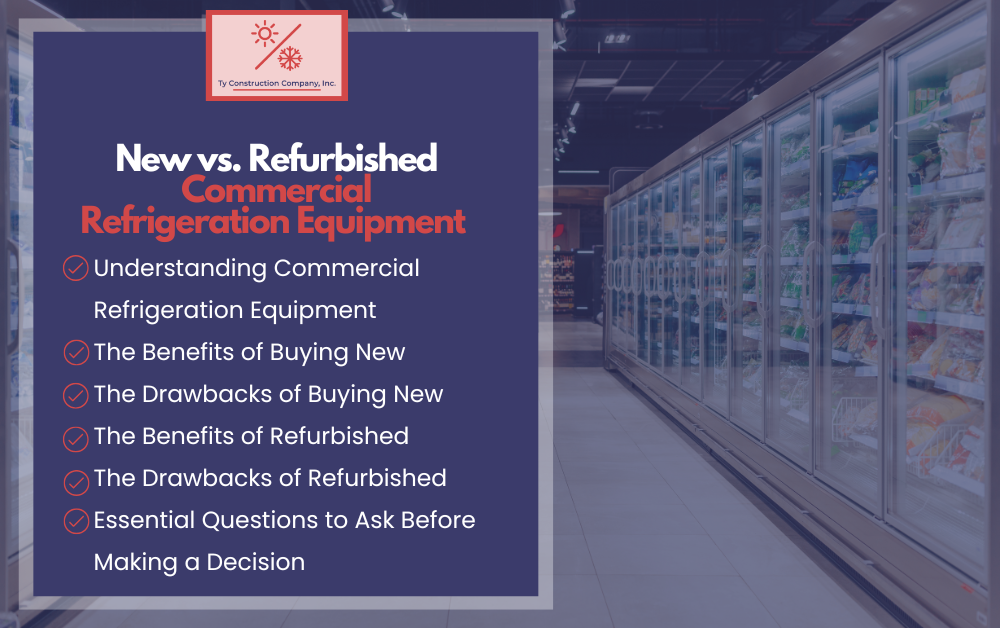
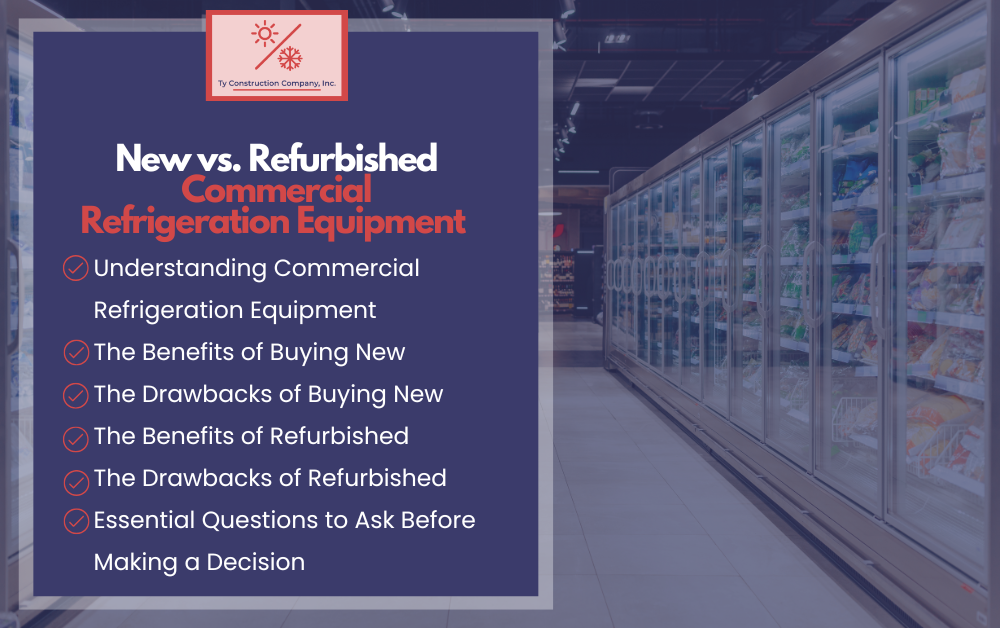
Understanding Commercial Refrigeration Equipment
Commercial refrigeration systems are designed to maintain precise temperatures for food, beverages, pharmaceuticals, and other temperature-sensitive products. These systems often include:
- Walk-in coolers
- Walk-in freezers
- Reach-in refrigerators
- Display cases
- Refrigerated prep tables
- Refrigerated warehouses
- Specialty cooling systems
Because these units operate around the clock, reliability, efficiency, and durability are critical factors when evaluating your options.
The Benefits of Buying New Commercial Refrigeration Equipment
Purchasing new equipment offers several advantages that can provide peace of mind and long-term value.
Maximum Reliability
One of the biggest benefits of new commercial refrigeration equipment is reliability. Since every component is brand new, there is less risk of unexpected failures or worn-out parts causing operational disruptions.
Businesses that cannot afford downtime often prioritize new equipment because it provides confidence that the system will perform as intended from day one.
Improved Energy Efficiency
Current refrigeration systems are created with energy efficiency in mind. Manufacturers continually develop technologies that reduce power consumption while maintaining optimal cooling performance.
Features such as advanced compressors, smart controls, variable-speed fans, and improved insulation can significantly reduce utility costs over time. While new equipment typically costs more upfront, lower energy bills can help offset that investment.
Manufacturer Warranty Protection
Most new units come with manufacturer warranties that cover specific parts and repairs for a designated period.
Warranty coverage can reduce financial risk and provide reassurance that unexpected issues will be addressed without significant out-of-pocket expenses.
Access to the Latest Technology
Commercial refrigeration technology has evolved rapidly in recent years. New equipment often includes:
- Remote monitoring capabilities
- Automated temperature controls
- Digital diagnostics
- Smart alerts and notifications
- Enhanced food safety features
These technologies can improve operational efficiency while helping businesses maintain compliance with industry regulations.
Longer Expected Lifespan
Because every component starts with zero wear and tear, new equipment generally offers the longest possible service life. With proper maintenance, many commercial refrigeration systems can provide dependable operation for well over a decade.
The Drawbacks of Buying New Equipment
While new systems offer numerous advantages, they may not be the perfect fit for every business.
Higher Initial Costs
The most obvious disadvantage is price. New commercial refrigeration equipment often requires a significant upfront investment.
For startups, small businesses, or organizations operating with limited capital, these costs may strain budgets and delay other important projects.
Potentially Longer Lead Times
Depending on the manufacturer, model, and customization requirements, new equipment may require weeks or even months to arrive.
Businesses facing an emergency replacement situation may not have the luxury of waiting for a factory-built unit.
Faster Depreciation
Like many capital investments, refrigeration equipment experiences the greatest depreciation in the first few years of ownership.
While this may not impact day-to-day operations, it can affect long-term asset valuation and resale potential.
The Benefits of Refurbished Commercial Refrigeration Equipment
Refurbished equipment has become an increasingly attractive option for businesses seeking cost-effective solutions.
Contrary to popular misconceptions, refurbished does not necessarily mean outdated or unreliable. High-quality refurbished units are typically inspected, repaired, cleaned, and tested before being resold.
Lower Purchase Costs
The primary advantage of refurbished commercial refrigeration equipment is affordability.
Businesses can oftentimes save a considerable amount compared to purchasing a new system. These savings may allow companies to allocate funds toward other priorities such as renovations, staffing, inventory, or technology upgrades.
Faster Availability
Refurbished equipment is often available immediately or with significantly shorter lead times than new units.
This can be especially valuable when an existing refrigeration system fails unexpectedly, and replacement is needed quickly.
Environmentally Friendly Choice
Choosing refurbished equipment can support sustainability efforts by extending the useful life of existing systems.
Rather than sending equipment to landfills prematurely, refurbishment helps decrease waste and minimizes the environmental impact associated with manufacturing entirely new units.
Proven Performance History
Some business owners appreciate that refurbished equipment has an established operating history.
Unlike brand-new systems that may not yet have extensive field performance data, certain refurbished models have already demonstrated durability and reliability over time.
Potential Access to Premium Equipment
Refurbished purchasing may allow businesses to obtain higher-end models that would otherwise exceed their budgets if purchased new.
This can provide access to premium features and capabilities at a significantly reduced price point.
The Drawbacks of Refurbished Equipment
While refurbished equipment offers substantial benefits, there are important considerations to keep in mind.
Limited Warranty Coverage
Many refurbished units have shorter warranties than new equipment.
Although some reputable refurbishers provide strong warranty protection, coverage may not be as extensive as manufacturer-backed warranties offered with new systems.
Unknown Equipment History
Even when equipment is professionally refurbished, it may have experienced years of prior use.
Factors such as operating conditions, maintenance history, and previous repairs can influence future performance and longevity.
Reduced Energy Efficiency
Older refrigeration systems often consume more energy than modern alternatives.
While refurbishment can restore performance, it cannot always replicate the energy-saving innovations found in today’s newest equipment.
Over time, higher utility costs may offset some of the initial savings gained from purchasing refurbished equipment.
Shorter Remaining Lifespan
Refurbished equipment generally has a shorter remaining lifespan than a brand-new unit.
While a properly refurbished system may provide years of dependable service, it typically will not match the longevity of a new installation.
Potential Parts Availability Issues
Older refrigeration models may use components that are more difficult to source.
As equipment ages, replacement parts can become less readily available, potentially increasing repair times and maintenance costs.
Essential Questions to Ask Before Making a Decision
Choosing between new and refurbished commercial refrigeration equipment requires careful evaluation of your business priorities.
Consider the following questions:
What Is Your Budget?
If preserving cash flow is your top priority, refurbished equipment may provide the most practical solution.
If long-term value and operational efficiency are your primary concerns, investing in new equipment may be worthwhile.
How Critical Is Reliability?
Businesses that cannot tolerate downtime often benefit from the added reliability and warranty protection associated with new systems.
Organizations with backup capacity may feel more comfortable accepting the potential risks associated with refurbished equipment.
How Long Do You Plan to Use the Equipment?
If you expect to operate the equipment for many years, a new system may deliver greater overall value.
For short-term facilities, temporary expansions, or budget-sensitive projects, refurbished equipment may be a smart alternative.
What Are Your Energy Costs?
In regions with high electricity rates, the efficiency improvements offered by newer systems can create meaningful long-term savings.
Calculating potential utility cost differences can help decide which option produces the best return on investment.
Is Food Safety a Major Concern?
Businesses handling perishable products must prioritize consistent temperature control and reliability.
In these situations, investing in newer technology may help reduce risk while supporting compliance requirements.
Finding the Right Balance
There is no universal answer when comparing new and refurbished commercial refrigeration systems. The definitive choice depends on your specific operational needs, financial goals, and facility requirements.
New equipment offers cutting-edge technology, maximum efficiency, longer service life, and greater warranty protection. Refurbished equipment delivers affordability, faster availability, and environmental advantages that can make it an alluring option for many businesses.
The key is to evaluate total ownership costs rather than concentrate solely on the initial purchase price. Factors such as maintenance expenses, energy consumption, downtime risks, and expected lifespan should all play a role in the decision-making process.
Conclusion
Selecting the right commercial refrigeration equipment is about more than choosing the lowest price or the newest model. It’s about discovering a solution that aligns with your business goals, operational demands, and long-term growth plans. Both new and refurbished systems offer unique advantages, and understanding their strengths and restrictions can help you make a confident investment.
Whether you’re planning a new facility, upgrading existing equipment, or exploring cost-effective alternatives, Ty Construction Company, Inc can help guide you through the process and ensure your refrigeration infrastructure supports your business for years to come.
Ready to evaluate your commercial refrigeration needs? Contact Ty Construction Company, Inc today to discuss your project and discover the best refrigeration solution for your facility.