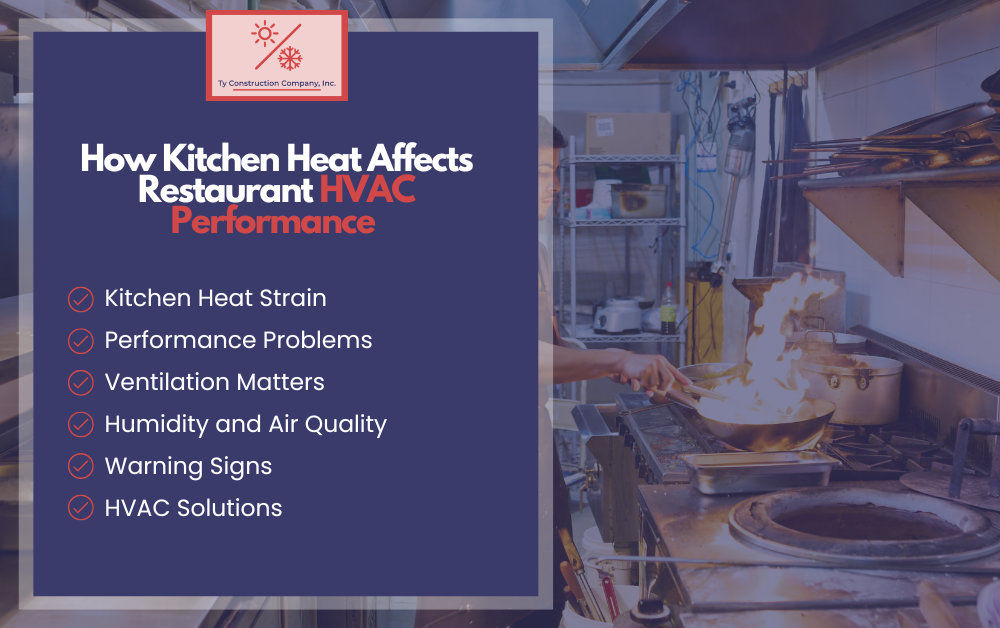
Restaurant kitchens create constant heat from ovens, grills, fryers, ranges, dishwashers, and warming equipment. During busy service hours, that heat can build quickly and place extra demand on the HVAC system. When the system has to work harder to keep up, it can affect comfort, energy use, airflow, and overall HVAC performance.
For restaurants, heating and cooling issues do not only affect the kitchen. Excess heat can spread into dining areas, impact employee comfort, create uneven temperatures, and make the customer experience less enjoyable. Understanding how kitchen heat affects HVAC performance can help restaurant owners spot problems early and know when to call TY Construction Company, Inc. for commercial HVAC service.
Why Restaurant Kitchens Put Extra Strain on HVAC Systems
Restaurant HVAC systems have to handle more than standard heating and cooling demands. A commercial kitchen produces steady heat, moisture, odors, and air movement throughout the day. When cooking equipment is running for hours at a time, the HVAC system has to work harder to keep the building comfortable.
This added strain can affect both the kitchen and the dining area. If the system cannot keep up with the heat load, temperatures may become uneven, airflow may feel weak, and energy costs may rise.
Heat From Cooking Equipment
Ovens, grills, fryers, ranges, broilers, and warming stations all release heat into the kitchen. During lunch or dinner rushes, several pieces of equipment may run at the same time. This creates a high heat load that can challenge the HVAC system.
Even if the thermostat is set correctly, the system may struggle to remove heat fast enough. Over time, that extra demand can reduce comfort and place more wear on the equipment.
Longer Hours of Operation
Restaurants often run kitchen equipment before, during, and after service. Prep work, cooking, dishwashing, cleaning, and closing tasks can keep heat levels high for many hours each day.
Because the HVAC system has fewer breaks, it may run longer than it would in other commercial spaces. Longer run times can lead to higher energy use, more maintenance needs, and reduced HVAC performance if the system is not properly maintained.
How Kitchen Heat Impacts HVAC Performance
Excess kitchen heat can make it harder for a restaurant HVAC system to maintain steady temperatures. When the system is constantly fighting heat from cooking equipment, dishwashing areas, and busy service periods, it may run longer and work harder than intended. Over time, this can affect comfort, efficiency, and overall HVAC performance.
The impact is often felt in multiple areas of the restaurant. The kitchen may stay hot even when the air conditioning is running, while the dining room may experience temperature swings, weak airflow, or uncomfortable drafts.
Uneven Temperatures
Kitchen heat can create major temperature differences between the back of house and front of house. Staff may be working in hot, uncomfortable conditions while guests in the dining area may feel too warm, too cold, or notice inconsistent airflow.
Uneven temperatures often point to air balance issues, ventilation problems, or an HVAC system that is struggling to keep up with the kitchen’s heat load.
Longer Run Times
When the HVAC system has to remove constant heat, it may run for longer periods throughout the day. This can increase energy use and put extra wear on components like fans, compressors, motors, and belts.
Longer run times can also make small maintenance issues worse. Dirty filters, clogged coils, or weak airflow can have a bigger impact when the system is already under heavy demand.
Reduced Cooling Efficiency
Kitchen heat can reduce cooling efficiency when the HVAC system, exhaust system, or make-up air system is not working properly. If hot air is not being removed effectively, the cooling system has to compensate.
This can lead to higher utility costs, more frequent repairs, and lower HVAC performance during peak restaurant hours.
The Role of Ventilation and Exhaust Systems
Ventilation plays a major role in restaurant HVAC performance. In a commercial kitchen, the HVAC system does not work alone. Exhaust hoods, exhaust fans, ductwork, and make-up air systems all help control heat, smoke, odors, grease particles, and air pressure.
When these systems are not working together properly, heat can build inside the kitchen. This can make the space uncomfortable for employees and force the HVAC system to work harder than necessary.
Exhaust Hood Problems
Exhaust hoods are designed to pull heat, smoke, steam, grease, and odors away from the cooking area. If the hood is not pulling enough air, kitchen heat can linger and spread into other parts of the restaurant.
Common exhaust-related issues may include dirty hood filters, weak fan performance, blocked ductwork, or equipment that is not properly aligned under the hood. When exhaust problems go unresolved, cooling the kitchen becomes much harder.
Make-Up Air Imbalance
When air is removed from the kitchen through the exhaust system, replacement air needs to enter the building. This is called make-up air. If the make-up air system is not balanced correctly, the restaurant may experience pressure problems, drafts, doors that are hard to open, or air being pulled from unwanted areas.
Poor make-up air balance can also affect dining room comfort. It may cause uneven temperatures, weak airflow, or added strain on the HVAC system. For restaurants, proper ventilation and air balance are essential for comfort, efficiency, and reliable HVAC performance.
Humidity, Air Quality, and Comfort Concerns
Kitchen heat is not the only factor that affects restaurant HVAC performance. Commercial kitchens also produce moisture, steam, smoke, grease particles, and odors. When these conditions are not controlled properly, the HVAC system has to work harder to maintain a comfortable and healthy indoor environment.
This can affect both employees and customers. A hot, humid kitchen can make working conditions uncomfortable, while poor air quality or lingering odors can impact the dining experience.
Higher Humidity Levels
Steam from dishwashers, boiling water, cooking equipment, and cleaning tasks can raise humidity levels inside the restaurant. When humidity is high, the air can feel warmer than the thermostat reading suggests.
This can make the HVAC system run longer as it tries to cool and dehumidify the space. If humidity remains high, the restaurant may feel sticky, uncomfortable, or harder to cool during busy service hours.
Odors and Indoor Air Quality
Poor ventilation can allow smoke, cooking odors, and stale air to move beyond the kitchen. When odors reach the dining area, they can affect how customers experience the restaurant.
Indoor air quality can also suffer when grease, moisture, and airborne particles are not removed properly. A well-maintained HVAC and ventilation system helps move air correctly, reduce odors, and create a more comfortable space for staff and guests.
Signs Kitchen Heat Is Hurting HVAC Performance
Kitchen heat can affect a restaurant long before the HVAC system completely breaks down. In many cases, the warning signs start small. Staff may notice that the kitchen feels hotter than usual, guests may comment on dining room comfort, or the system may seem to run constantly during busy hours.
Restaurant owners and managers should watch for signs such as:
- Hot or uncomfortable kitchen areas
- Dining room temperature swings
- Weak airflow from vents
- HVAC system running constantly
- Higher energy bills
- Excess humidity
- Cooking odors moving into customer areas
- Frequent repair calls
- Staff complaints about heat
- Equipment struggling during rushes
These issues can point to ventilation problems, poor air balance, dirty components, undersized equipment, or a system that needs maintenance. If the same problems keep happening, it may be time to schedule a commercial HVAC inspection before performance gets worse.
How Restaurants Can Improve HVAC Performance
Improving restaurant HVAC performance often requires more than adjusting the thermostat. Because commercial kitchens create steady heat, moisture, odors, and air movement, the HVAC system needs proper maintenance, ventilation support, and air balance to work efficiently.
Small problems can become much more noticeable during busy service hours. That is why restaurants should take a proactive approach instead of waiting until the kitchen becomes uncomfortable or the system starts breaking down.
Schedule Routine HVAC Maintenance
Routine maintenance helps keep the system clean, efficient, and ready for heavy daily use. During a maintenance visit, a technician can check filters, coils, fans, belts, motors, drains, refrigerant levels, and other important components.
When these parts are dirty, worn, or not working correctly, the system has to work harder to cool the restaurant. Regular maintenance can help reduce strain, improve airflow, and support better HVAC performance throughout the year.
Inspect Ventilation and Exhaust Systems
The kitchen’s exhaust and make-up air systems should also be inspected regularly. If exhaust hoods are not pulling enough air or make-up air is not balanced properly, heat and humidity can build quickly.
A professional inspection can help identify problems with hood performance, fan operation, ductwork, air pressure, and overall ventilation. Correcting these issues can make the kitchen more comfortable and help the HVAC system work more effectively.
Evaluate System Size and Layout
Some restaurants struggle with HVAC performance because the system is not properly sized for the space or the kitchen’s heat load. This can happen in older buildings, renovated spaces, or restaurants that have added new cooking equipment over time.
If maintenance and ventilation adjustments do not solve the problem, TY Construction Company, Inc. can help evaluate the system and recommend the best next step. That may include repairs, air balancing, equipment upgrades, or replacement options designed for the demands of a commercial restaurant environment.
Conclusion
Kitchen heat can have a major impact on restaurant HVAC performance, especially when cooking equipment runs for long hours or ventilation systems are not properly balanced. Excess heat, humidity, odors, and airflow problems can make the HVAC system work harder, increase energy use, and create uncomfortable conditions for staff and guests.
If your restaurant is dealing with hot kitchen areas, dining room temperature swings, poor airflow, or rising energy costs, TY Construction Company, Inc. can help. Our team can inspect the system, identify performance issues, and recommend the right maintenance, repair, ventilation, or replacement solution for your restaurant.