When shoppers walk into a store, their experience starts immediately. Temperature, airflow, and comfort shape how long customers stay and how relaxed they feel. These factors also influence how much shoppers browse. HVAC systems and refrigeration equipment work behind the scenes to create that environment from the moment customers enter.
In retail and grocery settings, refrigeration plays an especially important role. Open display cases, walk-in coolers, and freezer sections introduce constant temperature challenges that can affect both product quality and shopper comfort. When refrigeration and HVAC systems are not properly balanced, stores can feel too cold, uneven, or uncomfortable, often causing shoppers to cut their visit short. When these systems are coordinated effectively, they support a consistent, welcoming environment that encourages longer shopping times and better sales.
Why Store Comfort Directly Affects Shopper Behavior
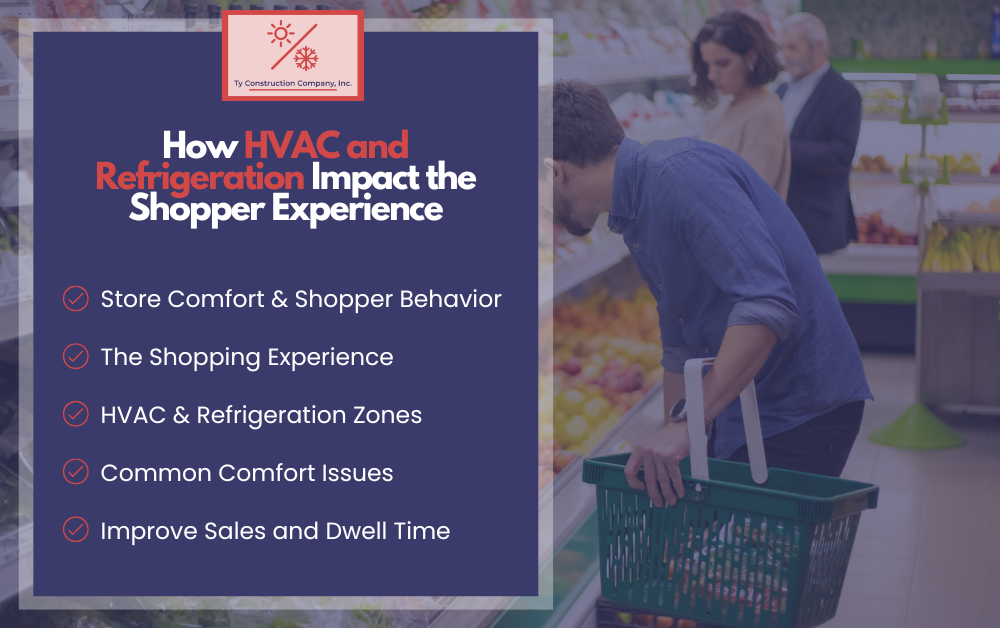
Store comfort plays a major role in how customers experience a retail space, even if they are not consciously aware of it. When temperatures feel consistent and balanced, shoppers tend to slow down, browse longer, and feel more at ease moving through the store. When comfort is off, customers notice quickly and often respond by shortening their visit.
Temperature issues can influence shopper behavior in several ways:
- Shorter shopping times when aisles feel too cold or too warm
- Reduced browsing near areas affected by refrigeration, such as freezer cases
- Lower overall satisfaction, which can impact repeat visits
- Negative perceptions of the store environment, even when products and pricing are strong
In grocery and food retail environments, comfort becomes even more important. Shoppers often move between refrigerated sections and ambient areas throughout their visit. If those transitions feel extreme or inconsistent, it disrupts the experience. HVAC systems play a key role in offsetting the cooling effects of refrigeration so customers can shop comfortably from entrance to checkout.
The Role of Refrigeration in the Retail Shopping Experience
Refrigeration is essential in grocery stores and food retail environments, but it does more than preserve products. The way refrigeration systems operate directly affects how shoppers experience each aisle and section of the store.
Product Freshness and Visual Appeal
Properly maintained refrigeration helps keep products looking fresh and appealing. Consistent temperatures support food quality, prevent condensation on packaging, and maintain clear visibility in refrigerated display cases, which builds shopper confidence in product safety and freshness.
Aisle Temperature and Comfort
Open refrigerated cases and freezer sections release cold air into surrounding aisles. Without proper management, these areas can feel noticeably colder than the rest of the store, making shoppers rush through or avoid certain sections altogether.
Shopper Trust and Perception
When refrigeration systems perform consistently, shoppers are less likely to question product handling and storage. Frost buildup, temperature fluctuations, or fogged glass can create doubt, even if products remain safe, which can negatively impact purchasing decisions.
How HVAC Systems Balance Refrigeration Zones
In retail environments, HVAC systems play a critical role in offsetting the cooling effects created by refrigeration. Open display cases, freezers, and walk-in coolers continuously release cold air into nearby aisles, which can make certain areas of the store feel uncomfortable if not properly managed.
HVAC systems help regulate airflow, temperature distribution, and humidity to maintain balance throughout the space. By directing warm air where refrigeration creates cold zones and ensuring consistent circulation across the store, HVAC systems prevent sharp temperature contrasts that disrupt the shopper experience. This balance allows customers to move comfortably from refrigerated sections to ambient areas without feeling sudden shifts in temperature.
When HVAC systems are properly designed and maintained, they work in harmony with refrigeration equipment rather than competing against it. This coordination supports a more consistent in-store environment, protects product quality, and helps create a shopping experience that feels comfortable from freezer aisles to the front door.
Common Comfort Issues Caused by HVAC and Refrigeration Problems
When HVAC and refrigeration systems are not properly balanced, comfort issues tend to show up in ways shoppers notice immediately. These problems often seem minor on their own, but together they can quietly shorten shopping times and hurt the overall experience.
Some of the most common comfort issues include:
- Cold aisles near refrigerated cases, where shoppers rush through instead of browsing
- Uneven temperatures throughout the store, creating hot and cold pockets in different areas
- Drafts or excessive airflow, especially near entrances or freezer sections
- Humidity issues, such as condensation on floors or fogged display doors
- Noise from struggling equipment, which can make the environment feel less welcoming
These issues rarely point to a single system failure. In most cases, they result from HVAC and refrigeration systems operating independently instead of as part of a coordinated strategy. Without proper alignment, small comfort problems can add up to a noticeably poorer shopper experience.
How Integrated HVAC and Refrigeration Improve Sales and Dwell Time
When HVAC and refrigeration systems are designed to work together, the impact goes beyond comfort. A balanced environment influences how shoppers move through the store, how long they stay, and how likely they are to make additional purchases.
Integrated systems support better retail performance by:
- Encouraging longer shopping times
Shoppers are more likely to browse when temperatures feel consistent across all areas of the store, including refrigerated aisles. - Improving product engagement
Comfortable conditions near refrigeration zones allow customers to spend more time comparing products instead of rushing through cold areas. - Supporting repeat visits
A consistently comfortable shopping experience builds familiarity and trust, increasing the likelihood that customers return. - Protecting product quality
Reliable refrigeration paired with proper HVAC balance helps maintain freshness and presentation, reinforcing shopper confidence in what they buy. - Reducing distractions
Quiet, well-regulated systems fade into the background, allowing shoppers to focus on products rather than environmental discomfort.
By treating HVAC and refrigeration as connected systems instead of separate components, retailers create an environment that feels intentional and inviting. That consistency helps turn routine shopping trips into longer, more profitable visits.
Conclusion
The shopper experience depends on more than products and pricing. HVAC systems and refrigeration shape how customers feel inside a store. Comfort affects how long shoppers stay and how they move through each aisle. When HVAC and refrigeration work together, stores feel balanced and welcoming. Shoppers browse longer and engage more with products. Reliable systems also protect food quality and presentation.
Retailers that invest in system coordination gain a clear advantage. To improve comfort, performance, and reliability, TY Construction can help optimize HVAC and refrigeration systems to support a better shopper experience.