Spring brings changing temperatures and increased system demand for many commercial facilities. After months of winter operation, refrigeration equipment can develop hidden issues that affect efficiency and reliability as warmer weather approaches. This makes spring an ideal time to focus on refrigerator maintenance before small problems turn into costly disruptions.
A proactive maintenance checklist helps protect product quality, maintain consistent temperatures, and reduce the risk of downtime. By addressing key areas early, businesses can improve performance, extend equipment life, and prepare their commercial refrigerators for the months ahead.
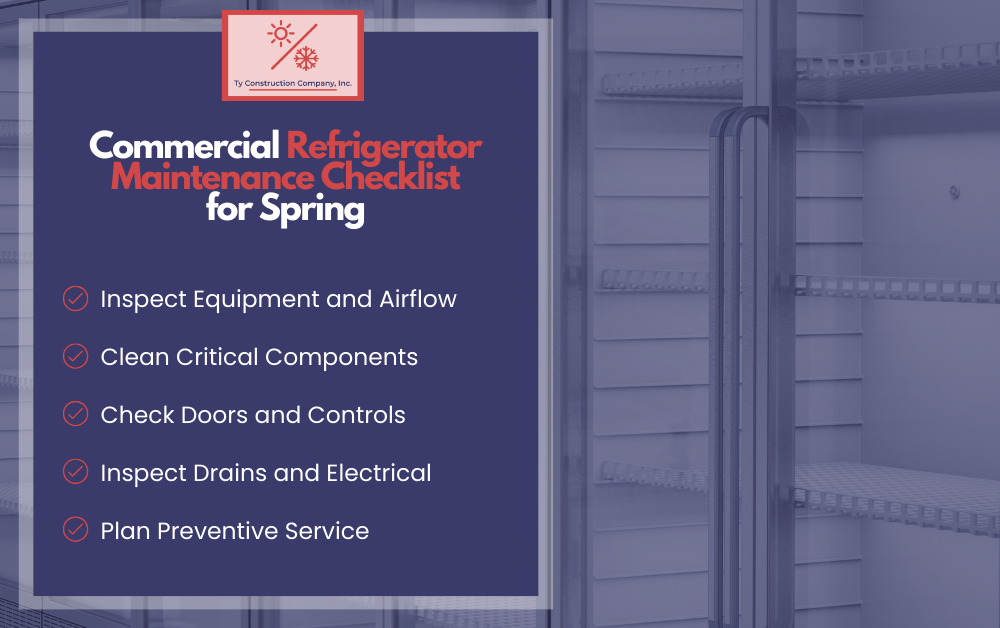
Inspect Equipment Condition and Airflow
Before diving into cleaning or adjustments, start with a broad inspection of the refrigeration unit’s overall condition. Walk around the equipment and look for visible signs of wear such as rust, loose panels, bent fins, or unusual vibration. These issues often develop gradually over winter and can signal airflow or mechanical problems that reduce efficiency once spring temperatures rise.
Pay close attention to airflow both around and inside the unit. Obstructed airflow forces the system to work harder than necessary, increasing energy use and strain on components. As part of this inspection, confirm that:
- Nothing is blocking vents, fans, or condenser areas
- Stored products inside walk-ins or cases are not restricting internal airflow
- Fans are operating smoothly without excessive noise or resistance
Catching airflow and condition issues early sets a strong foundation for the rest of the spring refrigerator maintenance process and helps prevent performance problems during peak usage.
Clean Critical Components That Affect Efficiency
Once the overall condition and airflow have been evaluated, the next priority is cleaning the components that have the greatest impact on performance. Dirt, dust, and grease tend to build up over time, especially during winter when equipment may run longer cycles. If left unaddressed, this buildup forces the system to work harder to maintain proper temperatures.
Focus first on condenser coils and surrounding areas, as even a thin layer of debris can significantly reduce heat transfer. Interior surfaces, evaporator components, and accessible fan areas should also be cleaned to support consistent cooling and proper airflow. Unlike a visual inspection, this step is hands-on and often produces immediate improvements in efficiency. Regular spring cleaning helps reduce energy consumption, stabilize operating temperatures, and ease strain on major refrigeration components.
Check Doors, Seals, and Temperature Controls
After cleaning is complete, attention should shift to the parts of the system that directly control temperature stability. Door seals and gaskets play a critical role in keeping cold air contained, yet they are often overlooked during routine maintenance. Even small gaps or stiffness can allow warm air to enter, causing temperature fluctuations and longer run times.
Test door seals by checking for visible cracks, brittleness, or areas that no longer sit flush. Doors should close fully and remain aligned without resistance. At the same time, verify that thermostats and temperature sensors are reading accurately and consistently across the unit. This step focuses on precision rather than effort, and small adjustments or replacements can make a noticeable difference in energy use, food safety, and overall system reliability.
Inspect Drainage, Electrical, and Safety Systems
Some of the most disruptive refrigeration failures come from support systems that are easy to overlook. Drainage and electrical issues often develop slowly and only become obvious once temperatures rise and systems run longer cycles.
As part of spring refrigerator maintenance, this inspection should focus on a few critical areas:
- Drain lines are clear and free of buildup that could cause leaks, ice, or odors
- Electrical connections are secure, with no signs of fraying, corrosion, or heat damage
- Control boards and safety switches are functioning as intended
- Warning indicators or alarms are tested and responsive
Unlike cleaning or seal checks, this step is about preventing sudden shutdowns rather than improving efficiency. Addressing drainage and electrical concerns early reduces the risk of emergency service calls and helps ensure the system operates safely as demand increases.
Plan Preventive Service Before Peak Spring Demand
By the time spring arrives, refrigeration systems are often asked to handle longer run times and heavier loads. Even when equipment appears to be operating normally, underlying issues can surface quickly once temperatures rise. This is why planning preventive service early plays such an important role in refrigerator maintenance.
Scheduling professional maintenance in spring allows technicians to fine-tune performance, identify wear that may not be visible during routine checks, and address minor concerns before they escalate. It also helps businesses avoid emergency calls during peak demand, when downtime is more disruptive and service availability can be limited. Taking a proactive approach at this stage supports reliable operation, protects inventory, and positions commercial refrigeration systems for consistent performance throughout the warmer months.
Stay Ahead of Refrigeration Issues This Spring
Spring is the right time to take a proactive approach to refrigerator maintenance. Addressing inspections, cleaning, seal checks, and system reviews early helps reduce the risk of breakdowns, protects product quality, and supports efficient operation as temperatures rise. A consistent maintenance routine also extends equipment life and minimizes unexpected disruptions during peak business hours.
If your commercial refrigeration system is due for spring maintenance, Ty Construction Company, Inc. can help. Their experienced team provides professional commercial refrigerator maintenance designed to catch issues early and keep your equipment running efficiently through the warmer months. Contact us today to schedule spring service and prepare your refrigeration systems for the season ahead.