Commercial HVAC systems are a major investment, and deciding whether HVAC repair is still worth it can be challenging as equipment ages. When performance issues start to appear, many businesses are faced with balancing short-term repair costs against long-term reliability, efficiency, and downtime. Making the right choice requires more than reacting to the latest problem.
Understanding when HVAC repair makes sense and when it no longer delivers value can help protect both comfort and operating budgets. In this blog, we’ll break down the key factors that influence repair decisions so commercial facility managers and business owners can confidently determine the best path forward for their systems.
Signs HVAC Repair Is Still a Smart Option
Not every performance issue means a full system replacement is necessary. In many cases, HVAC repair can still provide reliable results, especially when problems are isolated and the system has been properly maintained over time. The key is recognizing when repairs are addressing the root cause rather than masking larger issues.
Situations Where HVAC Repair Makes Sense
- The system is relatively young and within its expected service life
- Problems are limited to specific components rather than the entire system
- Repairs restore consistent performance without repeat service calls
- The system continues to meet comfort and load demands for the building
When HVAC repair resolves issues quickly and predictably, it can be a cost-effective way to extend system life. This approach allows businesses to maintain comfort and control costs while planning for future upgrades instead of making rushed replacement decisions.
When HVAC Repair Stops Being Cost-Effective
There comes a point where repeated HVAC repair no longer delivers reliable results. Instead of solving the problem, each service call becomes a temporary fix that leads to more downtime and higher costs. Recognizing this shift early can help prevent unnecessary spending and operational disruptions.
One of the clearest warning signs is frequency. If repairs are needed multiple times a year for similar issues, the system may be reaching the end of its useful life. Rising repair costs, longer service windows, and increasing strain on other components often indicate that HVAC repair is no longer addressing the root problem. At this stage, continuing to repair the system can create more risk than value, especially for commercial facilities that depend on consistent climate control.
How HVAC Repair Impacts Efficiency and Operating Costs
HVAC repair can restore performance, but it does not always restore efficiency. While replacing a failed component may get the system running again, older equipment often struggles to operate at optimal levels even after repairs. This can lead to higher energy use and rising utility costs over time.
To better understand the impact, it helps to look at efficiency trends rather than isolated repairs:
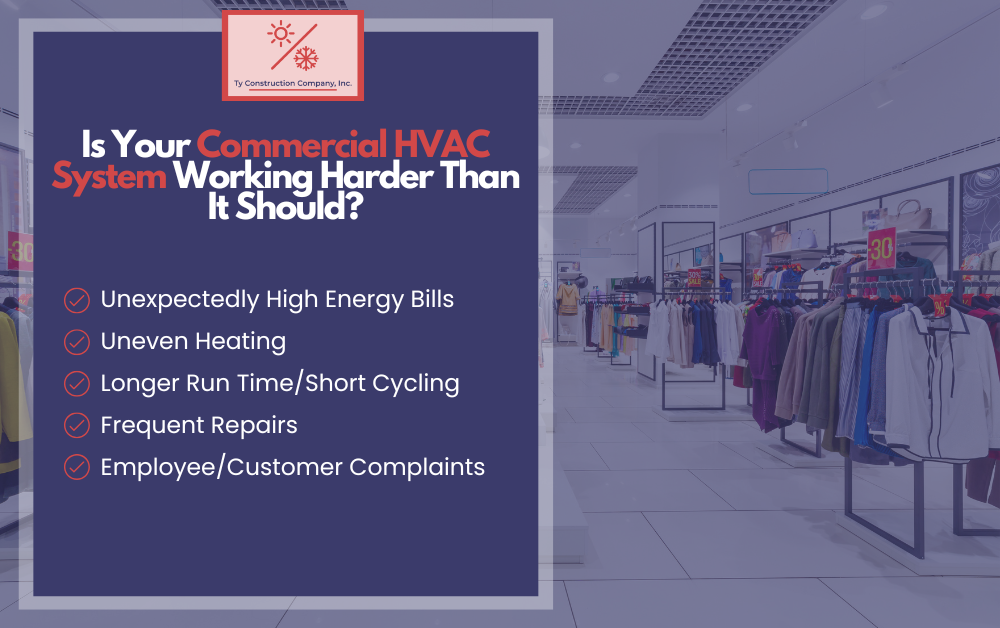
- Energy bills continue to climb despite completed HVAC repair work
- Systems run longer cycles to maintain set temperatures
- Comfort issues such as uneven heating or cooling persist
- Equipment operates louder or under greater strain
When HVAC repair no longer improves efficiency, operating costs become a critical part of the decision. At that point, businesses may find that investing in newer equipment offers better long-term value than continuing to repair an underperforming system.
Factors That Influence the Repair vs Replace Decision
Choosing between continued HVAC repair and system replacement depends on how well the equipment can still meet operational demands. Looking at the system’s condition through both lenses helps clarify which option delivers the most value over time.
When to Repair
Repair is often the right choice when issues are isolated and the system continues to perform reliably overall. Repairs tend to make sense when the system is within its expected lifespan, parts are readily available, and recent service has resolved problems without repeat failures. In these cases, targeted HVAC repair can stabilize performance while allowing businesses to plan for future upgrades on their own timeline.
When to Replace
Replacement becomes the better option when repair no longer restores dependable performance. Systems that experience frequent breakdowns, rising energy costs, or difficulty maintaining comfort are often signaling deeper limitations. When repairs address symptoms rather than root causes, investing in a new system can reduce long-term costs, improve efficiency, and provide more predictable operation for commercial facilities.
Getting a Professional HVAC Repair Assessment
Even with a clear understanding of system performance, making the final decision often requires expert insight. A professional HVAC repair assessment provides an objective look at the system’s condition and helps identify whether repairs will deliver lasting results or if replacement should be considered.
During an assessment, technicians evaluate overall system health, component wear, efficiency levels, and operational history. This process goes beyond addressing the immediate issue and focuses on long-term reliability and cost impact. By working with a qualified commercial HVAC provider, businesses can make informed decisions based on data and performance trends rather than uncertainty or guesswork.
Make the Right Call for Your Commercial HVAC System
Deciding whether HVAC repair is still worth it comes down to performance, cost, and reliability. While repairs can be effective in the right situations, ongoing issues, rising expenses, and declining efficiency often signal that a system is reaching its limits. Taking a proactive approach helps businesses avoid reactive decisions that lead to downtime and unexpected costs.
If you’re unsure whether continued HVAC repair is the best option for your commercial system, Ty Construction Company, Inc. can help. Our experienced team provides professional repair assessments to evaluate system condition, performance, and long-term value. Contact us to schedule an evaluation and get clear guidance on whether repair or replacement makes the most sense for your facility.