Winter brings new challenges for foodservice businesses. Colder weather means heating systems run longer, doors open and close more frequently to combat freezing air, and refrigeration units must work harder to maintain consistent temperatures. For restaurants, grocery stores, and convenience stores, these conditions can directly impact food safety compliance.
Ignoring winter maintenance not only risks equipment failure but also jeopardizes temperature control, sanitation, and health inspection performance. In this article, we’ll explore why winter maintenance is so critical to foodservice operations, which systems require the most attention, and how staying proactive ensures compliance all season long.
Why Winter Maintenance Is Essential for Foodservice Operations
The Demands of Cold Weather
When outdoor temperatures drop, indoor systems are pushed to their limits. Heating systems run continuously, and refrigeration units have to adjust to fluctuations caused by frequent door openings and lower ambient air temperatures. Even a small imbalance can disrupt food safety compliance if storage areas can’t maintain proper holding temperatures.
Winter also brings other risks: power outages, frozen pipes, and ice buildup around outdoor units. Without proper maintenance, these seasonal stressors can lead to expensive downtime and spoiled inventory.
Compliance and Food Safety Regulations
The FDA Food Code and HACCP guidelines require strict control of food storage temperatures. If refrigeration units dip below or rise above the approved range, even briefly, it can compromise product safety. Proper winter maintenance ensures all systems — from HVAC to refrigeration — remain reliable and compliant despite colder conditions.
Key Areas of Winter Maintenance for Foodservice Businesses
1. Refrigeration Systems
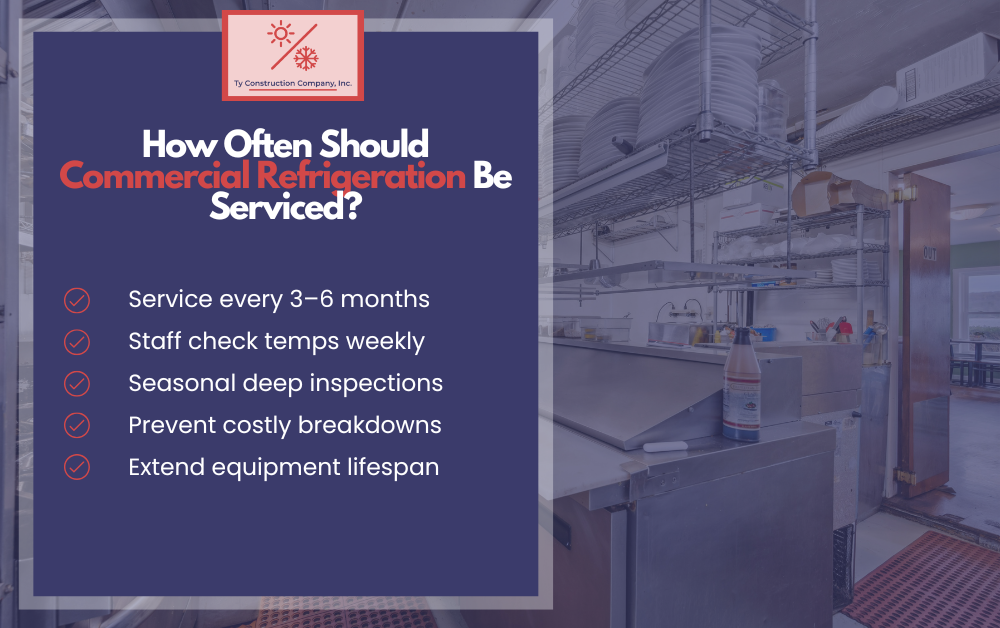
Refrigeration units are the backbone of food safety compliance. Winter air can affect refrigerant pressure and cause systems to short-cycle or freeze up. Regular maintenance helps prevent these issues before they lead to breakdowns.
Essential winter refrigeration maintenance tasks include:
- Inspecting and cleaning condenser and evaporator coils.
- Checking refrigerant levels and pressures.
- Testing door gaskets and seals to prevent cold air leaks.
- Calibrating temperature sensors and thermostats.
- Ensuring drain lines are clear of ice or debris.
A properly maintained refrigeration system keeps food at safe temperatures and reduces the risk of failed inspections.
2. HVAC Systems
In winter, heating becomes just as important as cooling. An underperforming HVAC system can create uneven temperatures throughout kitchens and dining areas, affecting both comfort and food safety.
Winter maintenance for HVAC systems includes:
- Replacing filters for clean, unrestricted airflow.
- Inspecting burners, heat exchangers, and pilot lights.
- Cleaning ductwork to improve air circulation.
- Checking thermostats and zoning controls for accuracy.
Balanced indoor temperatures help prevent condensation and maintain consistent environmental conditions for food preparation and storage.
3. Building Automation and EMS/BAS Systems
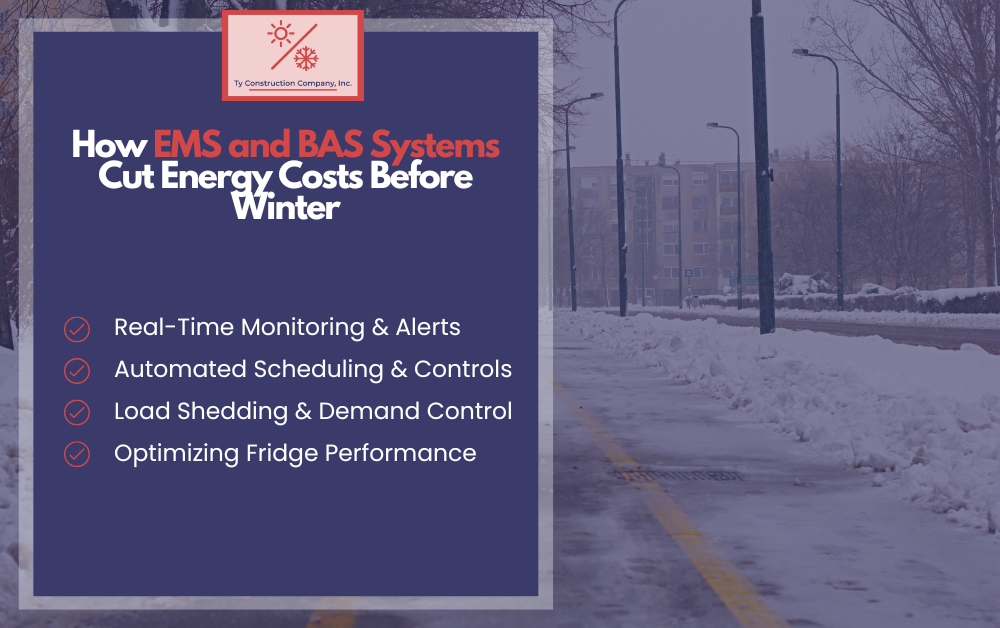
Energy Management Systems (EMS) and Building Automation Systems (BAS) play a vital role in compliance by continuously monitoring temperature, humidity, and energy use across multiple systems. During winter, these smart technologies can identify issues early — such as a walk-in cooler running too cold or a heater overworking — and automatically correct them.
Routine winter maintenance ensures sensors and automation components are calibrated, software is updated, and all connected systems are communicating properly. This integration keeps foodservice operations efficient and compliant 24/7.
4. Electrical and Power Backup Systems
Winter storms can cause power outages that disrupt refrigeration and HVAC operations. For foodservice facilities, even a short outage can result in significant product loss.
Maintenance should include:
- Testing backup generators.
- Inspecting electrical panels for wear or corrosion.
- Ensuring surge protection and voltage regulation are functioning properly.
Preparedness is part of compliance. Reliable power prevents temperature violations and protects perishable inventory.
Common Winter Maintenance Mistakes That Risk Compliance
Skipping Preventive Service
Waiting until something breaks is the fastest way to fail an inspection. Preventive maintenance saves both time and money by catching small problems before they cause downtime.
Ignoring Employee Training
Staff should know how to spot early warning signs such as fluctuating cooler temperatures, inconsistent thermostat readings, or unusual noises. When employees report issues early, maintenance teams can respond before compliance is compromised.
Neglecting Documentation
Regulatory compliance isn’t just about performance — it’s also about proof. Failing to log maintenance and temperature checks can lead to compliance penalties even if systems are functioning properly.
How Winter Maintenance Supports Food Safety Compliance
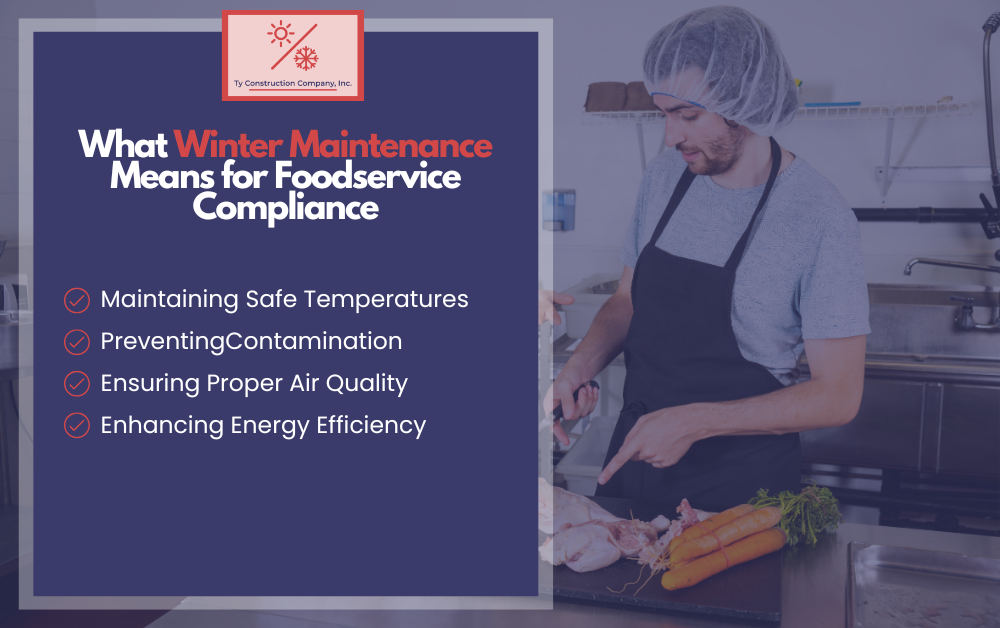
Maintaining Safe Food Temperatures
The most direct connection between winter maintenance and compliance is temperature stability. By keeping refrigeration systems in peak condition, businesses ensure food remains within safe holding ranges.
Preventing Equipment-Related Contamination
Dirty coils, clogged filters, or malfunctioning fans can create moisture buildup — an ideal environment for bacteria. Routine cleaning and inspections help maintain sanitary conditions.
Ensuring Proper Air Quality
HVAC systems that are cleaned and balanced provide consistent airflow, reducing humidity and airborne contaminants in kitchens and storage areas.
Enhancing Energy Efficiency and Sustainability
Efficient systems maintain compliance more easily. When refrigeration and HVAC units operate within optimal ranges, they use less energy, experience fewer breakdowns, and maintain better environmental control.
The Role of Professional Maintenance Services
Partnering with certified technicians is one of the best ways to ensure compliance year-round. Professionals use advanced tools to monitor, test, and verify system performance. They can also:
- Perform airflow and temperature mapping across zones.
- Calibrate thermostats and control systems.
- Replace worn parts before they cause downtime.
- Provide documentation for health inspections or corporate audits.
Professional maintenance doesn’t just solve problems — it prevents them.
Winter Maintenance Keeps Compliance on Track
When it comes to winter maintenance, consistency and planning make all the difference. From refrigeration and HVAC systems to building automation and insulation, every component plays a role in food safety and compliance.
Staying ahead of seasonal stress ensures your business maintains proper temperatures, reduces energy waste, and avoids costly equipment failures.
Don’t wait for the next cold snap to expose weaknesses in your system. Contact Ty Construction Company, Inc. today to schedule professional winter maintenance for your foodservice facility. Our experienced technicians specialize in HVAC, refrigeration, and automation systems built for cold-weather performance and compliance.