For grocery stores, restaurants, and convenience stores, refrigeration units are the backbone of daily operations. But when the summer heat rolls in, that backbone can begin to buckle—sometimes literally. If you’ve noticed your cooler struggling to stay cold, or worse, shutting down entirely, you’re likely dealing with a unit that’s overheating.
An overheating refrigeration system isn’t just inconvenient. It leads to food spoilage, higher energy costs, and long-term damage to critical equipment. This guide breaks down the top reasons your commercial refrigeration unit might be overheating—and what you can do to fix it before it becomes a costly emergency.
1. Poor Airflow Around the Unit
Check the Placement of the Unit
Refrigeration units generate a lot of heat, and that heat has to go somewhere. If the area around your unit is cramped, stuffy, or enclosed, the hot air has nowhere to go—forcing internal components to run hotter than they should. Whether your cooler is in a prep kitchen or a back storeroom, airflow matters.
Don’t Block Vents or Exhaust Areas
One of the most common causes of poor airflow is obstructed ventilation. Stacking boxes, supplies, or cleaning products near your refrigeration unit can block crucial exhaust points. When heat can’t escape properly, your unit becomes a hotbox on the inside and out.
The Importance of Open Space and Ventilation
Always maintain at least 6–12 inches of clearance around the unit. If your setup is in a tight space, consider installing additional ventilation or exhaust fans to help circulate air.
2. Dirty Condenser Coils
What Happens When Coils Get Dirty?
The condenser coil is responsible for releasing the heat removed from inside the unit. But when it’s coated in dirt, dust, or grease, it becomes insulated—unable to discharge heat effectively. This causes the system to retain more heat internally, which leads directly to overheating.
How Often Should You Clean Them?
Coils should be inspected monthly and cleaned at least every 3 months. In commercial kitchens where grease is present, monthly cleaning is often necessary. The dirtier the environment, the more frequently the coil needs attention.
DIY vs. Professional Coil Maintenance
While you can gently vacuum accessible coils, professional cleanings involve coil brushing, fin straightening, and sometimes chemical treatment. It’s worth it—especially in July when your system is under maximum load.
3. Overloaded or Improperly Stocked Interiors
Don’t Block Internal Air Vents
Inside every commercial refrigerator are air vents designed to circulate cold air evenly. If these are blocked by overstocking or poorly placed items, cold air can’t circulate—causing some areas to overcool while others overheat.
Overloading Slows Air Circulation
Cramming your refrigeration unit full might feel like a space-saving win, but it makes your system work harder. Airflow slows, compressor cycles increase, and your unit overheats just trying to keep up.
Let Products Cool Before Storing
Another often-overlooked mistake is placing hot food or beverages directly into the refrigerator. Doing so dumps a massive thermal load into the unit, forcing it into overdrive. Let items cool down to room temperature before storing.
4. Faulty or Worn-Out Door Seals
How Seals Keep Heat Out
Door gaskets and seals are your first line of defense against warm air infiltration. They keep conditioned air in and hot, humid air out. When seals wear down or crack, they allow outside air to enter the cabinet—even when the door appears closed.
Common Signs of Gasket Wear
- Visible cracks, tears, or warping
- Doors that won’t stay closed
- Condensation or frost near door edges
- Spikes in internal temperature
When to Replace Seals and Gaskets
If you see any of these issues, it’s time for a replacement. Gasket replacements are fast and affordable—and can drastically reduce compressor strain and energy usage.
5. High Ambient Temperatures or Inadequate Climate Control
Kitchen Heat and Outdoor Loading Zones
If your refrigeration unit is located near ovens, fryers, or receiving doors, ambient temperature can become a real issue. Hot surroundings increase the temperature of air pulled into the compressor, which forces the system to work harder and heat up faster.
The Role of HVAC in Equipment Health
A poorly cooled kitchen or storeroom impacts more than staff comfort—it affects your refrigeration systems too. HVAC systems should work in tandem with your refrigeration setup to maintain a safe operating temperature for equipment.
Why Summer Requires Special Attention
During July and August, your HVAC system is already at capacity. Pair that with heat-producing equipment, and it’s no surprise refrigeration units start to fail. An environment that’s just 5–10°F hotter than recommended can cut your unit’s lifespan in half.
6. Electrical or Mechanical Failures
Compressor Overload and Failure
The compressor is the heart of your refrigeration system. Overheating, frequent cycling, and dirty components can cause it to draw too much power and fail. If your compressor shuts off unexpectedly or runs non-stop, something’s wrong.
Fan Motor or Relay Malfunctions
Cooling fans, relays, and control boards regulate air and electrical flow. When they malfunction due to heat or age, the system becomes unbalanced—often leading to overheating and shutdowns.
Control Board or Sensor Issues
Temperature sensors and control boards ensure the refrigeration cycle runs correctly. If these components become faulty or miscalibrated, the system may not recognize that it’s overheating until it’s too late.
7. Lack of Preventive Maintenance
Why Regular Service Matters
Many overheating issues don’t happen overnight. They’re the result of gradual wear and neglect. Routine maintenance is the single most important step you can take to avoid summer failures.
What a Refrigeration Tune-Up Includes
- Coil cleaning
- Electrical inspection
- Door gasket check
- Airflow evaluation
- Compressor and fan motor testing
- Temperature calibration
How to Build a Seasonal Maintenance Plan
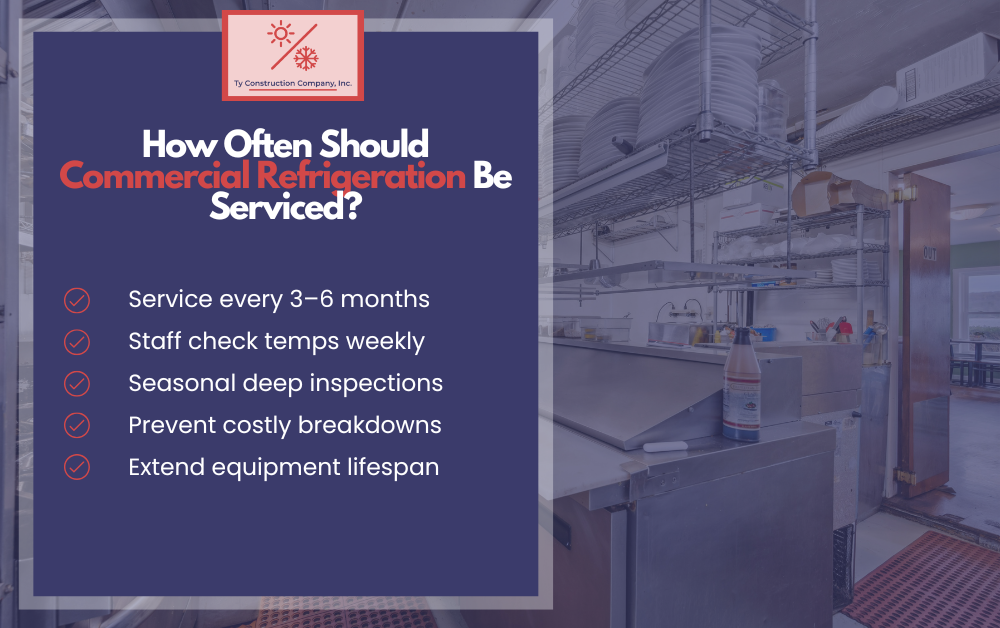
We recommend scheduling refrigeration maintenance at least twice a year—ideally before summer and winter. This ensures your system is ready for peak workloads.
Don’t Let Summer Overheat Your Bottom Line
Refrigeration systems are too important—and too expensive—to leave at risk during the hottest months of the year. Overheating leads to equipment failure, product loss, and energy waste. But with the right strategies in place, most of these issues are entirely preventable.
From simple fixes like improving airflow and replacing gaskets to larger interventions like HVAC optimization and EMS integration, proactive care is the key.
Let Ty Construction help you prevent overheating before it costs your business.
We offer commercial HVAC and refrigeration services tailored to grocery stores, restaurants, and food retailers. Contact us today to schedule your summer system checkup or start a custom maintenance plan.