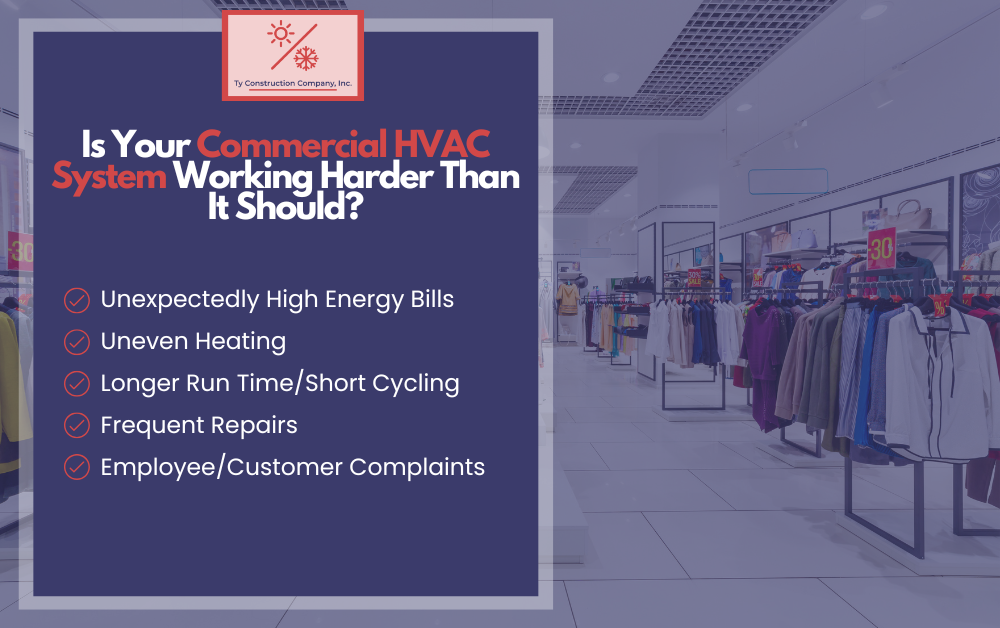
Winter puts commercial buildings to the test. Whether you operate a restaurant, grocery store, retail space, warehouse, or office, your commercial HVAC system becomes one of the hardest-working parts of your facility. Heating demands skyrocket, doors open constantly to freezing air, and large spaces require consistent temperature control.
But many business owners don’t realize when their HVAC system is working far harder than it should — wasting energy, straining components, and shortening equipment lifespan. By the time signs show up in high energy bills or comfort complaints, the system may already be under significant stress.
Understanding the early signs of an overworked HVAC system can help your business avoid costly repairs, improve energy efficiency, and maintain comfortable indoor conditions all winter long.
How to Tell If Your Commercial HVAC System Is Working Too Hard
A struggling HVAC system rarely fails without warning. Here are the most common signs your unit is pushing itself beyond normal capacity.
Rising or Unexpectedly High Energy Bills
If your utility bills increase sharply compared to previous winters — even with similar temperatures — it’s a major indicator that your system is running longer and harder to maintain temperature. Increased run time is often tied to airflow issues, inefficiency, or mechanical wear.
Uneven Heating Throughout the Building
Cold spots and overheated areas signal that warm air isn’t circulating properly. Blocked vents, duct issues, or failing blowers force the HVAC system to overwork in an attempt to balance temperatures.
Longer Run Times or Short Cycling
- Long run times mean the HVAC system can’t reach set temperature.
- Short cycling (turning on/off rapidly) indicates sensor issues or incorrect system size.
Both are signs the system is struggling and wasting energy in the process.
Frequent Repairs or System Alarms
If you’ve called your HVAC technician multiple times this year, or if your automation system is flagging repeated alerts, your unit is working harder than it should. Mechanical strain compounds over time, leading to expensive mid-winter breakdowns.
Employee or Customer Comfort Complaints
Complaints of chilly offices, drafty hallways, or overly warm break rooms usually reflect underlying performance issues. When a commercial HVAC system can’t deliver consistent comfort, it’s almost always working harder than necessary.
Common Causes of an Overworked Commercial HVAC System
Identifying why the system is overworking is the first step to fixing the issue.
Dirty or Clogged Filters
Filters collect dust, grease, and particulates. When not changed regularly, they block airflow — forcing the system to work harder to push air through. In winter, dirty filters are one of the top causes of HVAC strain.
Poorly Maintained Ductwork
Leaky ducts allow warm air to escape before it reaches occupied areas. Blocked or collapsed ducts restrict airflow entirely. In either case, the HVAC equipment must run longer and harder to compensate.
Incorrectly Sized HVAC Equipment
A system that’s too small never fully heats the building, running continuously without rest. An oversized system turns on and off in rapid cycles, wearing out components. Proper sizing is essential for efficiency and longevity.
Aging Components or Outdated Equipment
Older HVAC systems naturally lose efficiency. Worn motors, corroded components, and outdated controls cause the system to burn more energy as it struggles to keep up with winter demands.
Faulty Thermostats or Poor Sensor Placement
A thermostat installed near a draft, window, appliance, or heat source may read temperatures incorrectly — causing the unit to overheat or underheat the space. Misleading temperature readings force the entire system into unnecessary work.
Poor Insulation or Air Leaks in the Building
Commercial spaces with drafty windows, loading docks, and poorly sealed doors lose heat rapidly. This forces the HVAC system to run continuously, increasing energy bills and wear.
Lack of Zoning or Building Automation
A single thermostat cannot efficiently manage an entire commercial property. Different areas have different heating needs. Without zoning or a BAS/EMS system, your HVAC overworks to heat all spaces equally, even when it’s unnecessary.
Why an Overworked HVAC System Is a Serious Problem
A commercial HVAC system working harder than it should isn’t only an efficiency issue — it has long-term consequences.
Higher Operating Costs
Inefficient systems burn significantly more energy than necessary. Even small inefficiencies compound into thousands of dollars wasted over the winter season.
Reduced Equipment Lifespan
Mechanical components wear out faster when overworked. Motors burn out, heat exchangers crack, and compressors fail prematurely. Replacing a commercial HVAC system early is a major expense that preventive care could reduce.
Risk of Unexpected Breakdowns in Winter
Winter is the worst time to experience HVAC failure. Breakdowns disrupt operations, impact comfort, and may even force closures — especially in foodservice industries where temperature control is critical.
Inconsistent Comfort and Lower Productivity
Studies show workplace comfort influences morale and performance. Customers also spend less time in uncomfortable retail environments. Uneven heating directly impacts employee satisfaction and customer experience.
How to Reduce Stress on Your Commercial HVAC System
There are several practical steps businesses can take to improve HVAC performance and reduce strain.
Schedule Routine Preventive Maintenance
This is the single best way to keep your commercial HVAC system healthy. Technicians clean components, test controls, inspect ducts, and identify issues before they cause system-wide strain. Regular winter tune-ups dramatically reduce breakdowns.
Improve Airflow and Balance the System
Balancing airflow includes:
- Cleaning vents
- Sealing duct leaks
- Adjusting dampers
- Replacing filters
Proper airflow reduces strain immediately and improves indoor comfort.
Upgrade Thermostats or Add Smart Controls
Smart or programmable thermostats optimize temperature settings and reduce unnecessary run time. BAS and EMS systems go further by adjusting airflow, heating cycles, and fan speeds in real time across multiple zones.
Install a Zoning System
Zoning divides your building into separate temperature-controlled areas. This prevents one thermostat from overworking the entire system and allows the HVAC to heat different spaces based on occupancy and demand.
Improve Insulation and Seal Air Leaks
Simple improvements like weather stripping, door sweeps, and wall insulation can significantly improve heat retention, reducing how often the HVAC system must run.
Consider System Replacement
If your commercial HVAC system is 10–15 years old, it may be operating at a fraction of its original efficiency. Modern systems are quieter, more reliable, and far more energy-efficient. A replacement may offer long-term savings and improved comfort.
When to Call a Professional HVAC Technician
While some maintenance tasks can be handled internally, certain warning signs require professional attention.
Sudden Spikes in Utility Costs
This often signals a failing component or major inefficiency in the system.
Persistent Hot or Cold Zones
If airflow adjustments don’t solve the issue, ductwork or mechanical failure may be to blame.
Loud Noises, Burning Smells, or Vibrations
These are signs of serious mechanical issues and should be addressed immediately.
Temperature Won’t Reach the Setpoint
If the system runs constantly without achieving the temperature you set, it’s time for a professional diagnosis.
A trained technician can perform a full inspection, recommend repairs or upgrades, and restore proper efficiency before winter conditions worsen.
Keep Your Commercial HVAC System Running Efficiently This Winter
A commercial HVAC system working harder than it should is more than a seasonal inconvenience — it’s a warning sign of inefficiency, unnecessary expense, and possible mechanical failure. Ignoring an overworked system leads to higher energy bills, reduced comfort, and costly emergency repairs.
The good news is that preventive maintenance, improved airflow, zoning solutions, building automation, and professional inspections can restore efficiency and protect your investment.
If you suspect your HVAC system is overworking this winter, don’t wait for a breakdown. Contact Ty Construction Company, Inc. for expert diagnostics, maintenance, and system optimization. Our certified technicians help commercial buildings stay warm, efficient, and comfortable all season long.