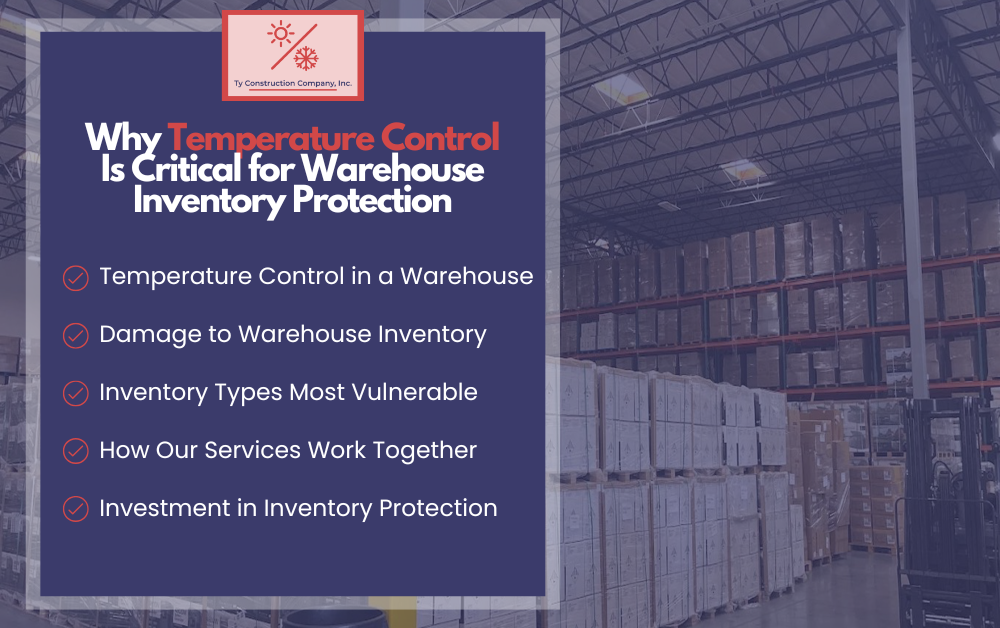
Warehouses are designed to store and protect valuable inventory, but many facility managers underestimate just how much temperature control affects product quality, safety, and overall asset value. Even small fluctuations in temperature or humidity can lead to damaged goods, shortened shelf life, compliance issues, and unexpected financial losses.
Proper temperature control in a warehouse goes far beyond basic heating and cooling. It requires a coordinated approach that balances HVAC systems, refrigeration equipment, and intelligent monitoring tools to maintain stable conditions around the clock. When these systems work together, they help safeguard inventory, reduce risk, and support efficient warehouse operations. When they don’t, inventory becomes vulnerable often without immediate warning.
What Temperature Control Means in a Warehouse Setting
In a warehouse environment, temperature control is not simply about maintaining a comfortable indoor climate. It is about creating consistent, stable conditions that protect inventory from environmental stress. Warehouses often span large, open spaces with varying ceiling heights, loading zones, and storage areas, which makes maintaining uniform temperatures more complex than in smaller commercial buildings.
Effective temperature control includes regulating ambient temperature, managing humidity levels, and ensuring proper airflow throughout the facility. HVAC systems play a key role in maintaining baseline temperatures and circulating air, while refrigeration systems support cold storage areas and temperature-sensitive zones. Without proper coordination, hot and cold spots can form, leading to uneven conditions that put inventory at risk.
True temperature control also requires visibility. Monitoring systems and automated controls help warehouse operators track conditions in real time and respond quickly when temperatures drift outside safe ranges. By combining reliable mechanical systems with intelligent oversight, warehouses can maintain the consistency needed to protect inventory value and support smooth day-to-day operations.
How Poor Temperature Control Damages Warehouse Inventory
When temperature control breaks down in a warehouse, the impact is rarely immediate, but it is almost always costly. Inventory damage tends to happen gradually and often spreads across multiple product categories before the problem is fully identified.
Common ways poor temperature control harms inventory include:
- Temperature fluctuations that cause materials to expand and contract, leading to warped products, cracked casings, or weakened packaging
- Moisture and condensation buildup, which can result in mold, corrosion, and label deterioration
- Uneven hot and cold zones that affect some storage areas more than others, creating inconsistent product conditions
- Accelerated product degradation, reducing shelf life and increasing waste
Beyond product damage, inconsistent temperature control places added pressure on mechanical systems. HVAC and refrigeration equipment must work harder to compensate for unstable conditions, increasing wear, energy usage, and the likelihood of unexpected failures. Over time, this creates a cycle where both inventory and infrastructure suffer, often turning a manageable issue into a major operational disruption.
Inventory Types Most Vulnerable to Temperature Control Issues
Not all warehouse inventory reacts the same way to temperature changes. Some products can tolerate minor fluctuations, while others require strict temperature control to maintain quality, safety, and compliance. Understanding which inventory types are most at risk helps warehouse operators prioritize monitoring and system performance.
Food and Beverage Products
Perishable goods are highly sensitive to temperature variation. Even brief deviations can lead to spoilage, bacterial growth, or shortened shelf life, resulting in wasted inventory and potential regulatory issues.
Pharmaceuticals and Medical Supplies
Many medical products must be stored within narrow temperature ranges. Inconsistent temperature control can compromise product effectiveness and lead to compliance violations, recalls, or rejected shipments.
Electronics and Sensitive Components
Electronics are vulnerable to both heat and moisture. Poor temperature control can cause condensation, corrosion, and component failure, often without visible signs until the product is used.
Packaging, Paper Goods, and Specialty Materials
Paper products, adhesives, and specialty materials can absorb moisture or degrade when temperatures and humidity levels fluctuate, leading to damaged packaging and reduced product value.
How HVAC, Refrigeration, and EMS/BAS Work Together
Effective temperature control in a warehouse depends on more than one system doing its job well. It requires coordination between HVAC, refrigeration, and EMS/BAS so conditions stay stable across every zone of the facility.
HVAC systems establish and maintain the overall ambient environment. They regulate heating, cooling, airflow, and humidity, helping prevent hot and cold spots that can put inventory at risk in large or high-ceiling spaces.
Refrigeration systems support areas that require tighter temperature ranges, such as cold storage rooms, freezers, or temperature-sensitive zones. These systems protect products that cannot tolerate even minor temperature variation.
EMS/BAS ties everything together by providing centralized visibility and control. These systems monitor temperature data in real time, automate adjustments based on demand or schedules, and alert operators when conditions move outside acceptable ranges. By integrating mechanical systems with intelligent controls, warehouses can maintain consistent temperature control while reducing energy waste and operational risk.
Why Temperature Control Is an Investment in Inventory Protection
For warehouses, temperature control is not just an operational requirement. It is a direct investment in protecting inventory value, maintaining efficiency, and avoiding unnecessary losses. The cost of prevention is often far lower than the cost of recovery after inventory has already been compromised.
Strong temperature control helps warehouses:
- Protect high-value inventory by maintaining stable storage conditions
- Reduce waste and write-offs caused by spoilage or product degradation
- Lower emergency repair costs by minimizing system strain and unexpected failures
- Support compliance and audits with documented temperature data
- Improve long-term energy efficiency through optimized system performance
By prioritizing temperature control, warehouse operators shift from reacting to problems after they occur to preventing them altogether. This proactive approach supports smoother operations, protects customer trust, and strengthens the overall reliability of the facility.
Conclusion
In a warehouse environment, temperature control plays a critical role in protecting inventory, maintaining compliance, and supporting efficient operations. When HVAC, refrigeration, and EMS/BAS systems work together, they create stable conditions that help prevent product loss, reduce operational risk, and extend the value of stored goods.
Investing in proper temperature control is not just about avoiding problems. It is about building a reliable, proactive strategy that safeguards inventory and supports long-term business performance. If you want to ensure your warehouse systems are truly protecting your inventory, TY Construction can help you evaluate your current setup and identify opportunities to improve your facility through integrated HVAC, refrigeration, and EMS/BAS solutions.