Commercial refrigeration systems are the backbone of foodservice, grocery, and retail operations. They keep products safe, maintain compliance with food safety regulations, and support customer trust. Yet, many businesses wait until something goes wrong before servicing their units — and by then, it’s often too late.
Neglecting commercial refrigeration service can lead to spoiled inventory, failed health inspections, and expensive emergency repairs. The good news is that preventive maintenance can keep your refrigeration running smoothly year-round. But how often should these systems actually be serviced? Let’s break down the ideal service schedule, what maintenance includes, and why it’s so important.
Why Servicing Commercial Refrigeration Matters
Servicing commercial refrigeration isn’t just about avoiding inconvenient breakdowns; it’s a matter of safety and compliance. Food safety laws require strict temperature control, and a malfunctioning refrigeration system can cause food to spoil, leading to fines, shutdowns, or even lawsuits. Regular servicing ensures that your units consistently meet compliance standards and protect consumer health.
Breakdowns also rarely happen at convenient times. A refrigeration unit failing in the middle of a dinner rush or during holiday grocery traffic can cause thousands in lost product and sales. Preventive maintenance identifies issues before they escalate, ensuring your business isn’t caught off guard.
Finally, servicing extends the lifespan of your equipment. Commercial refrigeration systems are significant investments. Without routine care, wear and tear accumulates quickly. Regular maintenance reduces strain, prevents minor problems from turning into major ones, and helps maximize the return on your investment.
Recommended Service Frequency for Commercial Refrigeration
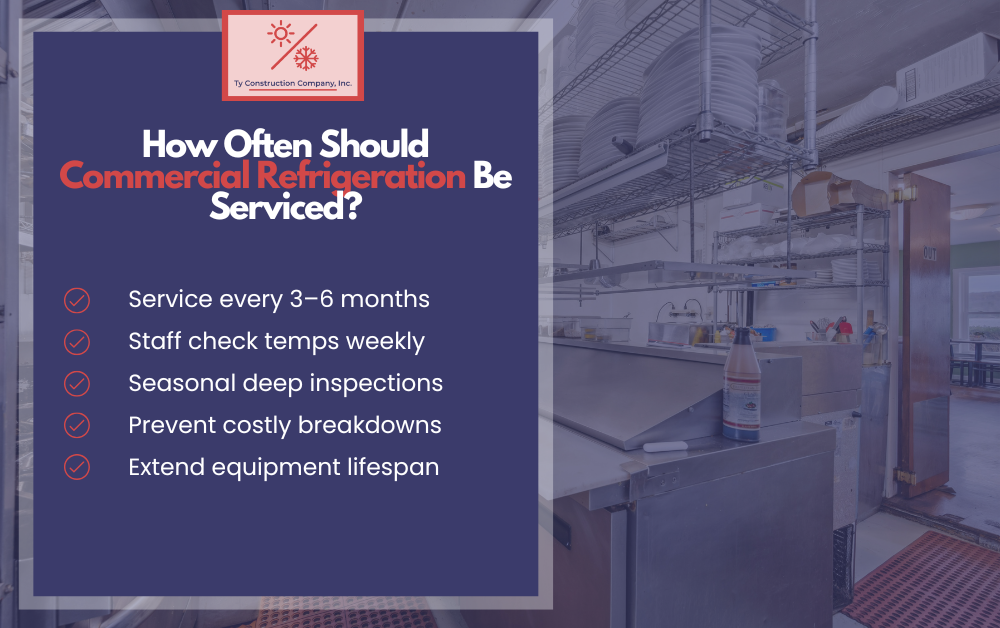
The ideal service schedule depends on usage, type of equipment, and environment. Most commercial refrigeration units should be serviced by a professional every 3 to 6 months. Restaurants and grocery stores with heavy daily use benefit from quarterly inspections, while lighter-use facilities may be able to stretch to twice a year.
Staff should also conduct regular checks between professional visits. This includes cleaning door seals, wiping down gaskets, checking and recording daily temperatures, and ensuring condenser areas remain free of dust and debris. Simple housekeeping tasks can make a big difference in performance.
Seasonal or annual deep inspections are also recommended, particularly before peak demand seasons like summer or the holidays. These inspections take a closer look at compressors, refrigerant levels, fans, and controls to ensure systems are prepared for heavier loads.
Here’s a quick look at service expectations:

What a Professional Refrigeration Service Includes
A professional service appointment covers much more than a quick look at your equipment. Technicians clean condenser and evaporator coils, check refrigerant levels, and inspect for leaks. They also test mechanical and electrical components such as fans, motors, and wiring to verify that everything is functioning properly.
Temperature calibration is another critical step. Technicians ensure that each unit maintains safe holding temperatures, making adjustments to sensors and controls as needed. This not only protects food safety but also helps reduce energy waste from overworked systems.
By taking a comprehensive approach, professional servicing both prevents breakdowns and helps keep businesses compliant with local regulations.
Signs Your Commercial Refrigeration Needs Immediate Service
Even with a consistent maintenance schedule, problems can arise. Watch for these signs that indicate you should schedule service immediately:
- Inconsistent temperatures that cause food to spoil or freeze unexpectedly
- Strange noises or odors, such as grinding, buzzing, or burning smells
- Rising energy bills that suggest units are working harder than necessary
- Excessive frost or condensation, which may point to refrigerant leaks or faulty seals
Ignoring these warning signs can lead to costly damage and downtime. Acting quickly protects both your equipment and your inventory.
Benefits of a Preventive Maintenance Contract
Many businesses choose a preventive maintenance contract for commercial refrigeration because it simplifies the process. With a contract, service visits are scheduled automatically, and businesses receive reminders before inspections are due. This eliminates the risk of forgetting maintenance during busy seasons.
Contracts also come with added benefits such as priority emergency support. In the event of a breakdown, contract customers often receive faster response times, reducing downtime and financial losses. Over time, contracts save money by lowering the likelihood of major repairs, minimizing spoilage, and improving system efficiency.
Industry-Specific Considerations
Not all commercial refrigeration systems are used the same way. Restaurants, grocery stores, and convenience stores have different needs, and their service schedules should reflect that.
Restaurants rely heavily on prep coolers, freezers, and walk-ins. These units are opened frequently and endure constant use, which means quarterly service is often necessary. Grocery stores and supermarkets operate large, complex systems with dozens of units. Centralized monitoring paired with quarterly professional servicing ensures reliable performance during high-demand shopping seasons.
Even convenience stores, which operate smaller systems, should not neglect service. Units often run 24/7 to keep grab-and-go foods and beverages safe, and biannual service is recommended. Regardless of industry, consistency is the key to avoiding costly failures.
Reliable Service Keeps Businesses Running
So, how often should commercial refrigeration be serviced? The rule of thumb is every three to six months, with staff performing routine checks in between. Restaurants and supermarkets benefit from quarterly inspections, while smaller operations may do well with twice-yearly service. Seasonal deep inspections ensure your systems are prepared for heavier demand.
Regular servicing protects food safety compliance, prevents unexpected downtime, reduces energy waste, and extends the lifespan of your equipment. In the long run, the cost of preventive maintenance is far less than the expense of emergency repairs and lost product.
Don’t wait for a breakdown to remind you of the importance of maintenance. Contact Ty Construction Company, Inc. today to schedule a preventive maintenance plan for your commercial refrigeration systems. Our certified technicians will keep your units performing at their best — so you can focus on serving your customers, not fixing equipment.